
I recently came across a news story that made me think about something we don’t discuss nearly enough in business: the amount of money small businesses lose simply by accepting payments from their customers.
Most of us don’t think twice about pulling out a credit or debit card. We tap, swipe, or insert our card, collect our purchase, and move on with our day.
But behind that simple transaction is a cost that the business owner has to absorb.
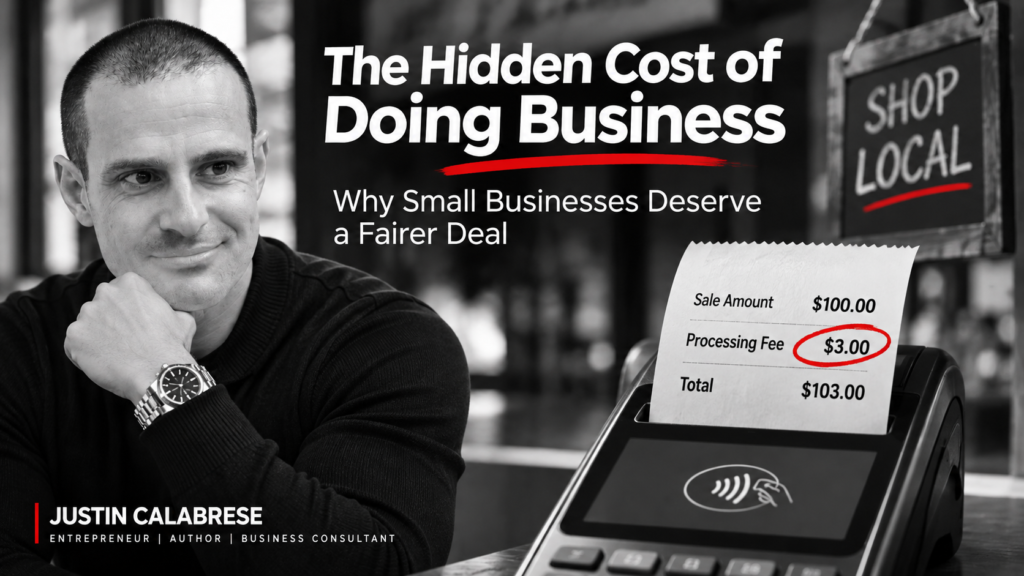
And when you start adding those costs together, the numbers become pretty significant.
In late October, a federal appeals court ruled against the Federal Reserve’s existing limits on certain debit card processing fees, finding that the regulations improperly allowed banks to include some costs when calculating those fees. The decision could eventually change how much businesses pay to process debit card transactions.
It’s an important development, particularly for small businesses that operate on already tight margins.
But I think the bigger issue goes beyond processing fees.
When did we become so comfortable making it expensive for people to operate a business?
The Costs Nobody Talks About
I’ve spent a considerable amount of time working with entrepreneurs, helping them understand their business models, develop strategies, and navigate the realities of business ownership.
One thing I’ve learned is that starting a business and successfully operating one are two very different things.
People often have great ideas. They’re passionate about their products, services, and the communities they want to serve.
But passion doesn’t pay the bills.
Between rent, insurance, utilities, payroll, taxes, licensing, technology, and payment processing, business owners can find themselves spending an enormous amount of money before they’ve made a single dollar in profit.
Consider a business generating $250,000 in annual card sales. If its effective processing cost averages 3%, that’s $7,500 in fees.
That’s $7,500 that could have gone toward hiring someone, purchasing equipment, improving the business, or simply giving the owner some financial breathing room.
And while processing costs vary depending on the type of card, payment provider, and transaction, the broader point remains the same.
Small expenses add up.

We Celebrate Entrepreneurs, but Do We Actually Support Them?
Something I’ve always found interesting is how much we celebrate entrepreneurship in this country.
We encourage people to start businesses. We talk about innovation, economic development, and creating opportunities.
We recognize entrepreneurs for taking risks and building something from nothing.
But once those businesses are operating, the conversation seems to change.
Suddenly, they’re expected to navigate complicated regulations, absorb rising costs, compete against major corporations, and somehow remain profitable.
I’ve seen how much work goes into developing a business plan, securing funding, and preparing for growth. I’ve also seen how easily an unexpected expense can disrupt an otherwise promising business strategy.
This is especially important in communities like Hartford, where small businesses contribute to neighborhood development, employment opportunities, and local economic activity.
For many entrepreneurs, their business isn’t just an investment.
It’s their livelihood.
And I think we sometimes forget that.
A Fairer Business Environment Shouldn’t Be Controversial
I’m not suggesting that banks, payment processors, or other service providers shouldn’t earn money.
They’re businesses too.
But I do believe we need more transparency and fairness in the costs associated with operating a small business.
A large corporation processing millions of transactions may have negotiating power that a neighborhood retailer simply doesn’t have.
The smaller business often has fewer options and less flexibility.
That difference matters.
I also think business owners need to become more proactive about understanding their expenses.
Too often, entrepreneurs focus almost entirely on generating additional revenue without taking the time to examine where their money is going.
Increasing sales is important, but controlling costs is equally important.
Sometimes the greatest opportunity for growth isn’t finding another customer.
It’s finding a better way to operate.
What I Think Needs to Change
I believe supporting small businesses requires more than encouraging people to shop locally or attend networking events.
Those things are valuable, but meaningful support also means creating an environment where businesses have a realistic opportunity to succeed.
That includes access to affordable financing, practical business education, transparent financial services, and resources that help entrepreneurs make informed decisions.
It also means recognizing that the challenges facing small businesses aren’t always the result of poor management.
Sometimes the cost of doing business is simply too high.
And while no single court decision or policy change will solve that problem, I think conversations about payment processing fees are a good place to start.
The Bigger Picture
At the end of the day, I don’t believe we should measure the strength of our economy solely by how much money businesses generate.
We should also consider how much of that money businesses are actually able to keep.
A business can generate impressive revenue and still struggle to survive.
An entrepreneur can work 60 hours a week and still have difficulty paying themselves.
And a neighborhood can be filled with hardworking business owners who are doing everything right but continue to face financial barriers.
That’s the reality I think deserves more attention.
We spend a lot of time encouraging people to become entrepreneurs. Maybe it’s time we spend just as much energy making sure they can afford to stay entrepreneurs.