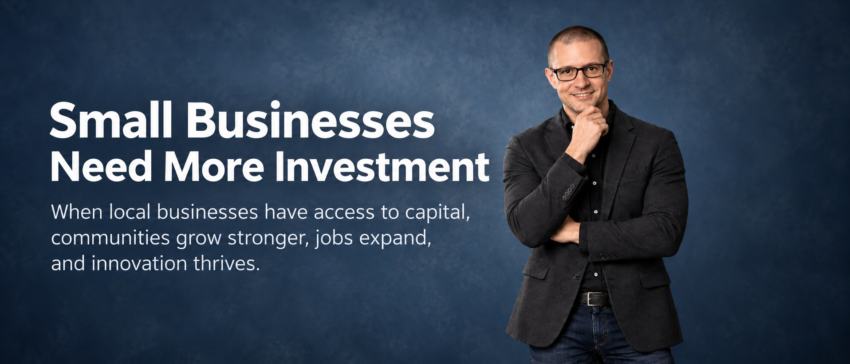
When we talk about economic growth in America, the conversation often revolves around Wall Street, major corporations, and the latest developments in technology. We hear about stock market performance, corporate earnings, and billion-dollar investments. But I believe we’re overlooking one of the most important drivers of our economy: small businesses.
Behind every neighborhood restaurant, family-owned store, and independent service provider is an entrepreneur who took a chance on an idea. Someone who invested their savings, worked long hours, and believed they could build something meaningful.
Yet despite their importance to our economy, many small business owners continue to face significant barriers to success.
And I believe it’s time we rethink how we support them.
The Challenges Facing America’s Small Businesses
According to Main Street America’s Fall 2026 Small Business Survey, which gathered responses from 1,568 small business owners, entrepreneurs continue to face challenges involving cash flow, operating expenses, and attracting new customers.
These findings highlight a reality I’ve witnessed throughout my career: starting a business is difficult, but sustaining one can be even harder.
As someone who founded seven businesses by the age of 28, I’ve experienced firsthand the challenges that come with entrepreneurship. I’ve navigated financial uncertainty, changing markets, technological disruptions, and the constant pressure to remain competitive.
Entrepreneurship requires determination, but determination alone doesn’t guarantee success.
Business owners also need access to education, financial resources, technology, and professional guidance.
Unfortunately, these opportunities aren’t always equally accessible.
Small Businesses Need More Than Money
One of the biggest misconceptions about supporting small businesses is that financial assistance alone will solve their problems.
Don’t get me wrong. Access to capital is incredibly important. Whether an entrepreneur needs funding to purchase equipment, expand operations, hire employees, or improve a storefront, financial investment can make a meaningful difference.
But what happens after that money is spent?
If a business owner doesn’t understand cash flow, financial forecasting, pricing strategies, or operational efficiency, even a substantial investment may fail to produce sustainable growth.
That’s why I believe we need to shift our thinking.
We shouldn’t simply invest money in small businesses. We should invest in the people running them.
Throughout my professional career, I’ve had the opportunity to support entrepreneurs through business consulting, technology implementation, and organizational development.
One thing has become increasingly clear: business owners often have incredible ideas and determination, but they don’t always have access to the knowledge or tools necessary to turn those ideas into sustainable enterprises.
Imagine what could happen if every aspiring entrepreneur had access to affordable business education, financial coaching, and modern technology.
The potential impact could extend far beyond individual businesses.
Technology Should Create Opportunities, Not Barriers
Technology is transforming nearly every aspect of business.
Artificial intelligence, digital marketing, customer relationship management systems, and financial planning platforms are changing how organizations operate.
For larger corporations, investing in these technologies is often part of an established business strategy.
For small businesses, however, adopting new technology can be intimidating and expensive.
I’ve worked with entrepreneurs who are exceptionally talented at what they do but struggle with basic digital systems.
Some have never developed a formal business plan. Others rely on handwritten financial records or lack an effective online presence.
These challenges don’t necessarily reflect a lack of ambition or ability. Often, they reflect a lack of access to training and resources.
And that creates a competitive disadvantage.
I believe digital literacy should be treated as an essential component of modern entrepreneurship.
We need to make technology more accessible, provide practical training, and help business owners understand how digital tools can improve their operations.
Artificial intelligence may be changing the future of business, but we cannot allow small businesses to be left behind in that transformation.
Economic Development Begins at the Community Level
Some of the most meaningful work I’ve been involved in has focused on supporting small businesses and entrepreneurs in Hartford, Connecticut.
Through business technology consulting and community economic development initiatives, I’ve seen how education, mentorship, and access to resources can help entrepreneurs approach their businesses differently.
A business owner who learns to manage financial projections can make better investment decisions.
An entrepreneur who develops a comprehensive business plan can better communicate their goals to lenders and potential investors.
A neighborhood retailer who adopts digital marketing tools can reach customers beyond their immediate community.
These improvements may seem small individually, but collectively, they can contribute to stronger businesses and more resilient local economies.
When small businesses succeed, they can create employment opportunities, strengthen commercial corridors, and contribute to the economic stability of surrounding neighborhoods.
Investing in a small business isn’t just an investment in one entrepreneur. It’s an investment in the community that surrounds that business.
We Need to Redefine What Business Success Looks Like
For years, we’ve measured entrepreneurial success through financial metrics: revenue, profitability, market share, and business valuation.
Those measurements matter. A business cannot survive without financial sustainability.
But I believe we should also consider the broader impact that businesses have on people and communities.
Does a business create meaningful employment opportunities?
Does it provide essential products or services?
Does it contribute to the economic stability of its neighborhood?
Does it create opportunities for future entrepreneurs?
These questions deserve a place in conversations about economic development.
My own journey through entrepreneurship, business consulting, and education has taught me that financial achievement is only one dimension of success.
The ability to use professional experience to create opportunities for others can be equally meaningful.
The Future of Entrepreneurship Requires Collaboration
If we want to strengthen America’s small business economy, responsibility cannot fall on entrepreneurs alone.
Financial institutions, universities, corporations, nonprofit organizations, government agencies, and community leaders all have opportunities to contribute.
We need stronger partnerships that connect business owners with practical resources.
That means expanding access to business education, improving financial literacy, supporting digital transformation, and creating opportunities for mentorship.
It also means listening to entrepreneurs.
Too often, programs are designed around what institutions believe business owners need rather than the challenges entrepreneurs actually experience.
Effective economic development should begin with understanding those challenges and building solutions around them.
Final Thoughts: The Next Great Business Could Be Right Around the Corner
Somewhere in America today, an entrepreneur is developing an idea that could change an industry, create jobs, or revitalize a neighborhood.
That person may not have access to investors, an extensive professional network, or the latest technology.
But they may have something equally valuable: determination, creativity, and a vision for the future.
The question is whether we’re willing to give that entrepreneur a fair opportunity to succeed.
Having spent much of my career building businesses and helping others navigate the challenges of entrepreneurship, I believe the future of our economy depends on how effectively we support those willing to take risks and create opportunities.
We don’t need to wait for the next billion-dollar corporation to transform our communities.
Sometimes, meaningful economic change begins with a small business, a good idea, and someone willing to believe in its potential.
Because when we invest in small businesses, we’re not simply supporting entrepreneurship. We’re investing in people, strengthening communities, and helping build a more prosperous future.
And that’s an investment worth making.