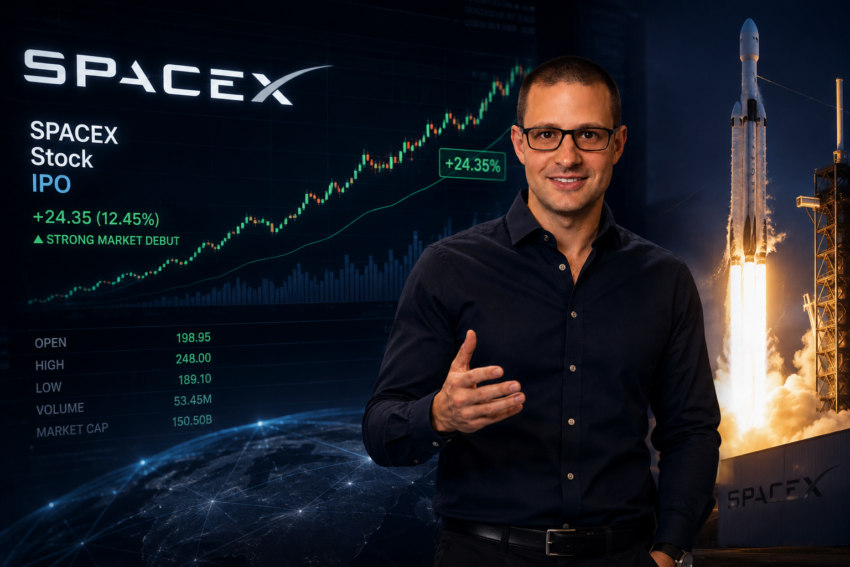
For years, investors have eagerly awaited one of the most anticipated stock offerings in modern history: SpaceX. Founded by Elon Musk, SpaceX has transformed the aerospace industry through reusable rockets, commercial satellite deployment, and ambitious plans for interplanetary travel. While the company remains privately held today, speculation surrounding a future initial public offering (IPO) continues to intensify.
If SpaceX eventually goes public, it will likely become one of the most closely watched IPOs in market history. Investors around the world would finally have an opportunity to own a piece of a company that has fundamentally changed the economics of space travel and positioned itself as a leader in one of the world’s most innovative industries.
As someone who closely follows technology and innovation, I understand the excitement. In full disclosure, I drive a Tesla—not because I idolize Elon Musk or agree with everything he says, but because I genuinely appreciate the technology. The vehicle is efficient, software-driven, and packed with features that make the driving experience enjoyable. That same perspective applies to investing. Successful investors learn to separate their emotions from the personality behind a company and focus instead on the business itself.
Many investors will undoubtedly be drawn to a future SpaceX IPO because of Musk’s reputation. While leadership certainly matters, the real investment thesis should focus on the company’s launch capabilities, Starlink’s growth trajectory, government contracts, technological innovation, and future revenue opportunities. The strongest investment decisions are often made when we focus less on personalities and more on business performance.
Why Investors Are Excited
SpaceX has accomplished what many once considered impossible. The company dramatically lowered launch costs through reusable rocket technology, secured billions of dollars in commercial and government contracts, and established itself as a dominant force in the global aerospace market.
Beyond rockets, SpaceX has created Starlink, a satellite internet service that has rapidly expanded across the globe. Unlike traditional aerospace companies that rely heavily on one revenue stream, SpaceX is building multiple businesses simultaneously. Investors see opportunities in space transportation, satellite communications, defense contracts, data services, and potentially even future space-based infrastructure.
This combination of innovation, growth, and market leadership has many investors believing that SpaceX could become one of the defining companies of the next several decades.
Could the IPO Pop?
The question every investor asks when a highly anticipated company prepares to go public is simple: Will the stock pop?
History shows that popular IPOs often experience significant gains during their first days of trading. When investor demand exceeds the available supply of shares, prices can move quickly. Companies with strong brand recognition and compelling growth stories frequently experience this phenomenon.
A SpaceX IPO could potentially see a significant first-day surge due to:
- Global brand recognition
- Strong institutional investor demand
- Significant retail investor interest
- Limited share availability
- The excitement surrounding space exploration and technological innovation
However, investors should be careful not to confuse a successful first day with a successful long-term investment. Some IPOs soar initially and then decline as valuations normalize and investors begin focusing on financial performance rather than excitement.
The Risks Investors Should Watch
Every investment opportunity comes with risk, and a SpaceX IPO would be no exception.
Valuation Risk
One of the greatest dangers surrounding any highly anticipated IPO is paying too much for future expectations. Investors can become so focused on what a company may accomplish that they overlook whether the stock price already reflects that optimism.
Even if SpaceX continues to grow rapidly, investors could still experience disappointing returns if the company debuts at an excessive valuation.
Dependence on Government Contracts
SpaceX has diversified significantly, but government partnerships remain an important part of its business. Changes in political priorities, budget allocations, or regulatory environments could impact future revenue growth.
Capital Intensive Operations
Unlike software companies, aerospace companies require enormous investments. Rockets, launch facilities, research and development, satellites, and future projects such as Starship require billions of dollars in ongoing capital expenditures.
Innovation at this scale is expensive.
Regulatory and Safety Concerns
The aerospace industry operates under intense regulatory oversight. Launch delays, technical failures, environmental concerns, or accidents could negatively impact investor confidence and create volatility in the stock.
Leadership Risk
Elon Musk’s vision has undoubtedly helped shape SpaceX into what it is today. At the same time, markets often react strongly to news involving high-profile founders. Leadership changes, public controversies, or strategic shifts can create uncertainty among investors.
Investing Requires Both Courage and Discipline
One thing I have learned over the years is that investing should not be driven by fear. Some of the greatest investment opportunities in history looked risky when they first emerged. Investors who purchased shares in innovative companies early often endured periods of uncertainty before seeing substantial rewards.
That does not mean investors should throw caution to the wind. Taking calculated risks is very different from speculating blindly.
New stocks and IPOs can be exciting. They often represent innovation, growth, and the possibility of substantial returns. But investors must balance enthusiasm with research. Understanding a company’s financial position, competitive advantages, risks, and long-term strategy is far more important than chasing headlines or social media excitement.
Final Thoughts
If SpaceX eventually becomes publicly traded, it may represent one of the most significant investment opportunities of the decade. It could also become one of the most scrutinized stocks on the market.
Will the IPO pop? It certainly could.
Will the stock continue climbing for years afterward? That depends on execution, profitability, growth, and whether the company can continue delivering on its ambitious vision.
For investors willing to do their homework, a future SpaceX IPO could offer a front-row seat to one of the most transformative businesses of our generation. The key will be remembering that while innovation captures attention, fundamentals ultimately drive long-term investment success.