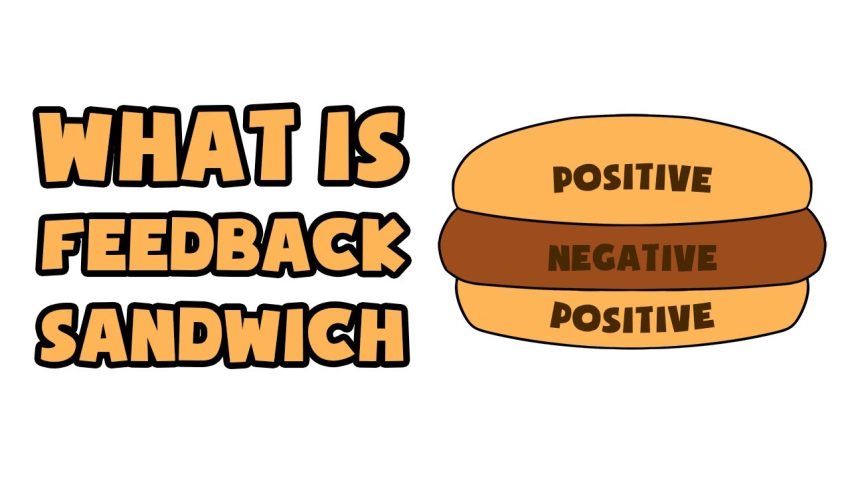
If there’s one universal truth in management, it’s that delivering feedback can feel a lot like defusing a bomb — one wrong word and boom, there goes morale for the week. Early in my career, I used to think the best approach was just to be “honest and direct.” Turns out, “honest and direct” sounds a lot like “cold and terrifying” when you’re on the receiving end. That’s when I learned the art — and science — of the sandwich approach.
Now, for the uninitiated, the sandwich approach is a simple but mighty management tool: Compliment → Constructive Criticism → Compliment. It’s essentially wrapping your message of improvement between two soft slices of positivity. It’s a little like emotional cuisine — you’re serving something hard to chew, but you’ve buttered both sides first.
Let’s say an employee misses a deadline. Instead of opening with, “You missed this and now everything’s on fire,” you could start with, “Hey, you’ve been doing an amazing job keeping projects organized lately — I can see the effort you’re putting in.” Then slide in the meat: “We just missed the last deadline, and I want to figure out how we can stay on track next time.” And then finish with the top bun: “You’ve got a ton of potential, and I know once we tweak our planning a bit, you’ll crush it.”
That’s it — simple, genuine, digestible. The person leaves encouraged, not deflated. Nobody goes home thinking they’re one mistake away from exile. They think, “Okay, my boss believes in me — I just need to adjust.” And that, my friends, is management gold.
Why do your staff appreciate the sandwich approach? Because it shows humanity. It proves that you see their whole effort, not just the five minutes that went wrong. It tells them they’re valued as people, not just performance metrics. When your employees feel seen, they’ll give you more — more effort, more trust, and yes, more results.
And let’s be real — we’ve all been on the other side of that conversation before. Remember when someone gave you “feedback” that was really just criticism with no cushion? You probably spent the rest of the day replaying the words in your head, wondering if you were terrible at your job or if your boss was having a bad day. The sandwich approach eliminates that anxiety. It says, “You’re doing great. Here’s something to work on. And by the way, I still believe in you.”
Now, I should mention — this strategy works best when it’s authentic. If you overuse it or layer on too much fluff, people will start to notice. “Oh great,” they’ll think, “he just said something nice — brace for impact.” So don’t use it as manipulation; use it as motivation. Be specific in your praise, honest in your critique, and sincere in your encouragement.
The truth is, management is part psychology, part empathy, and part stand-up comedy. You’ve got to keep the tone light enough for people to stay open, but meaningful enough for them to take action. A well-crafted feedback sandwich can do both — it makes tough conversations easier to digest without watering down the message.
And if you really want to take it to the next level, throw in an actual sandwich. I’m serious — try giving feedback over lunch. It’s amazing how a turkey club can turn tension into teamwork. Just maybe avoid saying “You’re on thin ice” while serving someone a cold-cut combo.
At the end of the day, the sandwich approach isn’t about sugarcoating. It’s about balancing honesty with humanity. When done right, it builds stronger relationships, fosters growth, and keeps your team’s spirit intact. After all, a happy team doesn’t just perform better — they stay longer, care more, and bring their best selves to work.
So next time you need to give feedback, remember: it’s not what you say, it’s how you serve it. And if you can serve it on fresh bread with a side of kindness, you’ll have a team that keeps coming back for seconds.